
Moulage sous pression sur mesure
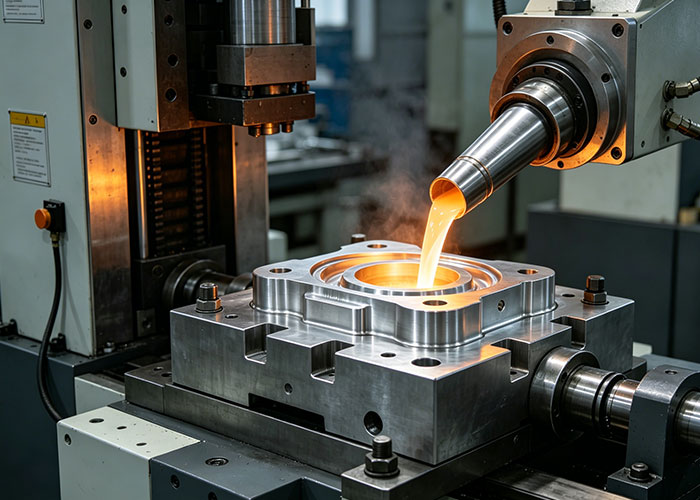
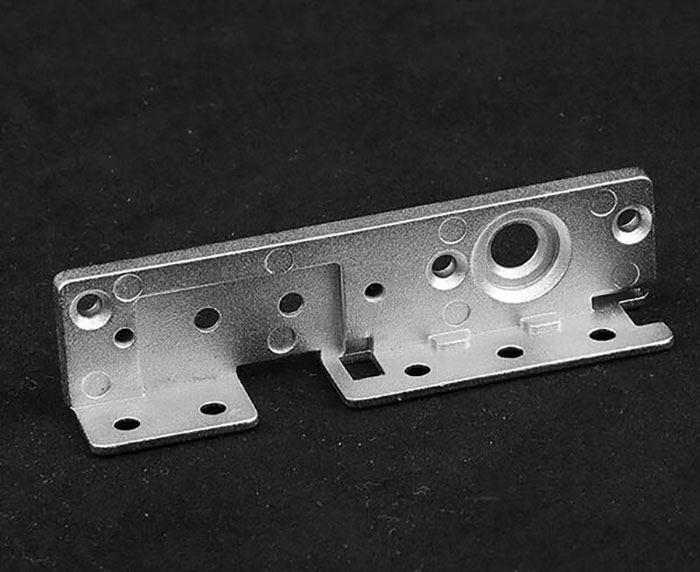
La fonderie sous pression est un procédé de fabrication utilisé pour produire des pièces métalliques alliant haute précision, régularité dimensionnelle et formes complexes. Elle consiste à injecter du métal en fusion dans un moule — appelé « matrice » ou « coquille » — sous une pression élevée. Une fois le métal solidifié à l’intérieur, le moule est ouvert et la pièce obtenue, appelée « moulage », est extraite.
Ce procédé excelle dans la réalisation de pièces complexes et précises, et est couramment employé pour la production à grande échelle. Des techniques avancées, telles que le moulage par compression (squeeze casting) et le moulage à l’état semi-solide, permettent d’améliorer encore davantage la qualité des pièces produites. Il est à noter qu’environ 80 % des pièces réalisées par ce procédé sont en aluminium, ce qui témoigne de l’utilisation généralisée de ce matériau.
Avantages de la fonderie sous pression
Le moulage sous pression est un procédé rapide et efficace qui permet de fabriquer des pièces rapidement tout en générant peu de déchets. Il est parfaitement adapté à la production de masse et à la rentabilité économique. Ce procédé permet d’obtenir des détails précis et des surfaces lisses, ce qui est idéal pour les formes complexes. Il réduit ainsi le besoin de finitions supplémentaires, permettant de maintenir des coûts bas. Les pièces moulées sous pression sont robustes et offrent une durée de vie supérieure à celle d’autres types de composants.
Rapidité et efficacité
Le moulage sous pression est un procédé rapide qui permet de produire des pièces en peu de temps tout en minimisant les déchets, ce qui le rend idéal pour la production de masse et la rentabilité.
Précision et état de surface
Le moulage sous pression permet d’obtenir des détails complexes et des surfaces lisses, réduisant ainsi le besoin de travaux de finition approfondis.
Formes complexes
Le moulage sous pression permet de réaliser des formes complexes avec précision, ce qui est idéal pour des composants aux géométries élaborées.
Résistance
Les pièces moulées sous pression sont solides et durables par rapport aux alternatives.
Applications industrielles du moulage sous pression

Robotique

Communications

Électronique

Automobile

Médical

Énergie

Aérospatial

Produits de grande consommation
Matériels
Le choix du matériau approprié implique de prendre en compte divers facteurs, tels que l’utilisation prévue de la pièce, les propriétés mécaniques requises (résistance, dureté, ductilité), les propriétés thermiques, la résistance à la corrosion ainsi que les coûts. Chaque matériau présentant ses propres avantages et limites, consulter nos ingénieurs et experts en matériaux expérimentés peut vous aider à faire le meilleur choix pour votre projet. Vous trouverez plus d’informations sur les principaux types de matériaux de moulage sous pression que nous proposons dans les sections ci-dessous. Si vous avez une demande concernant un matériau spécifique, n’hésitez pas à nous en faire part !
A380
A383
A360
ADC12
Zamak 3
Zamak 2
AZ91D
Autres
Pourquoi nous choisir
Nous appliquons rigoureusement les normes de qualité ISO et avons obtenu la certification ISO 9001:2015. Nos lignes de production sont ainsi dotées de technologies de pointe garantissant précision et exactitude lors de la fabrication. Grâce à des équipements de mesure et de contrôle sophistiqués intégrés à nos installations, nous vérifions que tous les matériaux et composants sont conformes à vos spécifications.
Devis immédiat
Si votre demande de devis contient des informations claires, les devis sont généralement transmis en quelques heures.

Expérience dans le secteur
Forts d'une expérience acquise depuis 2010 dans le prototypage et la fabrication rapides, nos ingénieurs ont développé un savoir-faire approfondi. Nous sommes en mesure de prendre en charge tous types de projets.

Réseau massif
Nos installations en interne nous permettent de réaliser vos projets rapidement. De plus, grâce à nos liens étroits avec des partenaires spécialisés dans la fabrication rapide, notre capacité de production est illimitée.

Plus de 30 000 projets livrés
Plus de 30 000 projets ont été livrés à nos clients dans le monde entier depuis nos débuts en 2010, et nous avons reçu d'innombrables commentaires positifs.
Comment travailler avec nous

Télécharger un fichier CAO
Commencez par choisir votre procédé de fabrication privilégié, puis téléchargez votre fichier de conception.

Obtenir un devis
Ensuite, configurez les détails du projet tels que le matériau, l’option de finition et la quantité, obtenez un devis précis ainsi que des retours sur la fabricabilité (DFM), puis passez votre commande.

Pièces livrées !
Une fois la production terminée et vos pièces validées lors des contrôles qualité, elles vous sont expédiées.
FAQs
Toute production réussie commence par une analyse approfondie de la fabricabilité. Une fois votre fichier CAO téléchargé, la plateforme de Willgus analyse instantanément la géométrie, l’épaisseur des parois, les porte-à-faux et la faisabilité des tolérances grâce à des algorithmes DFM intégrés. Vous obtenez un retour immédiat à l’écran en quelques secondes, mettant en évidence les zones à risque potentielles. Pour les projets complexes ou de haute précision, nos ingénieurs réalisent une analyse DFM manuelle sous un jour ouvré et proposent des suggestions claires et étayées par des données concernant les ajustements de conception, les processus de fabrication ou le choix des matériaux. En examinant la fabricabilité dès le début, vous évitez les retouches, réduisez les délais et garantissez une transition fluide et en toute confiance de la conception à la production. Téléchargez dès maintenant votre fichier CAO pour recevoir un retour immédiat ou demander une analyse manuelle par nos ingénieurs.
Les délais dépendent de la complexité de la pièce, de la quantité et du procédé choisi. Willgus (usinage CNC/impression 3D) peut expédier les commandes sous 3 à 5 jours, tandis que le moulage par injection et la production en petite série nécessitent généralement 2 à 4 semaines. Pour obtenir un délai précis, veuillez soumettre vos plans 2D/3D ainsi que les informations sur le matériau et la quantité ; notre système estimera instantanément le délai lors de l’établissement du devis.
Willgus propose un large éventail d’options de finition pour les pièces métalliques et plastiques, notamment l’anodisation, le revêtement par poudre, la peinture, le traitement électrolytique, le brossage, le microbillage et le polissage. Il est possible d’obtenir des couleurs personnalisées grâce à l’utilisation de résines teintées dans la masse ou par une finition ultérieure selon les références RAL ou Pantone. Nous assurons également la vérification de la constance des couleurs et le contrôle du niveau de brillance afin de garantir une uniformité visuelle entre les différents lots. Vous pouvez découvrir les types de finitions et consulter des exemples sur nos pages dédiées aux finitions de surface et aux matériaux.
Chez Willgus, chaque produit est soumis à une vérification rigoureuse — de la production d’essai et des contrôles d’inspection jusqu’à la validation par le client — avant son expédition. Notre processus d’assurance qualité garantit que toutes les pièces sont conformes aux spécifications convenues avant la livraison, minimisant ainsi les risques de non-conformité. Nous sommes fiers de notre précision et de notre fiabilité ; chaque expédition résulte d’une validation conjointe entre nos ingénieurs et nos clients.
Placez vos pièces dans
la production d'aujourd'hui
Toutes les informations et tous les fichiers téléchargés sont sécurisés et confidentiels.